
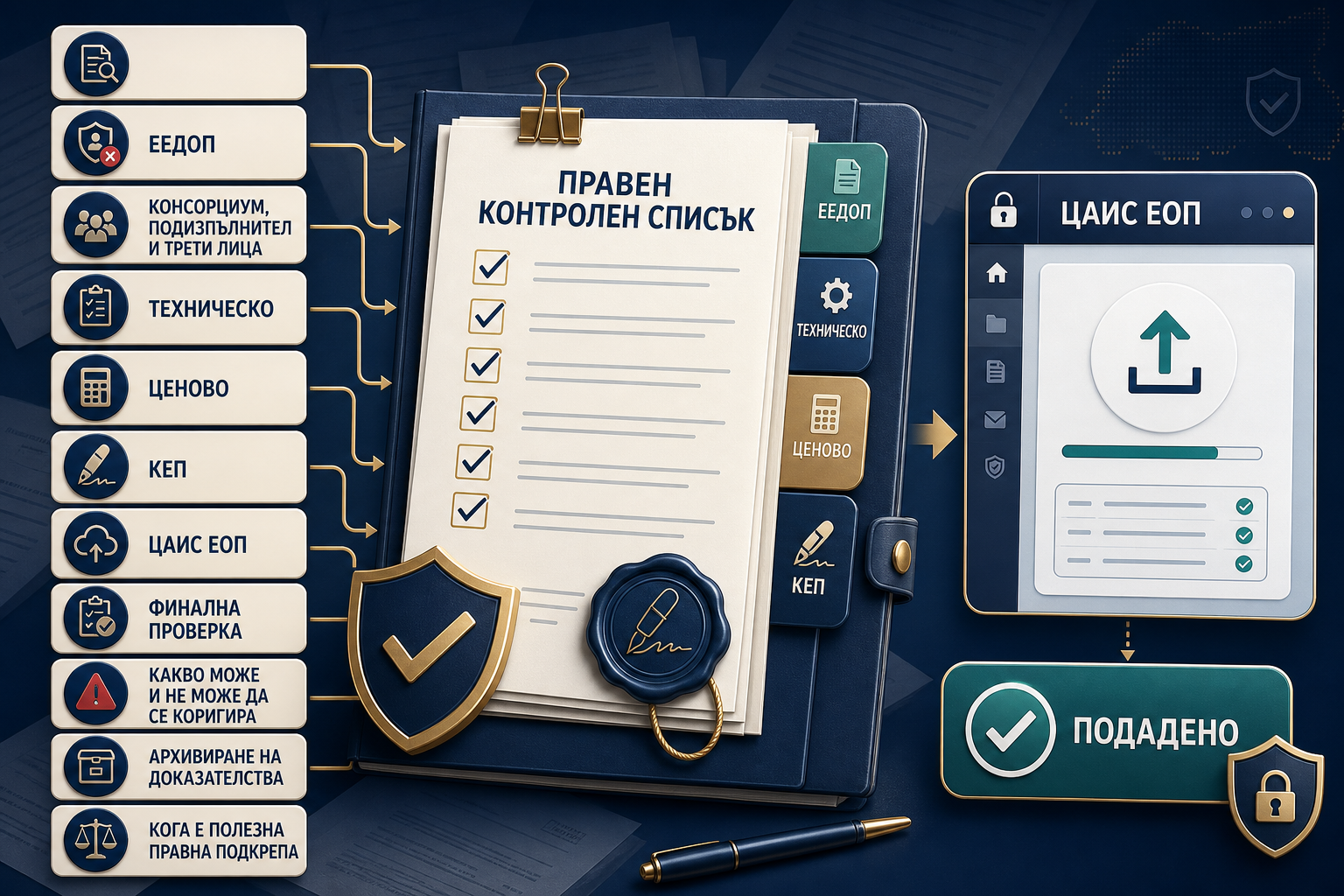
Even a financially advantageous bid may be rejected due to a failure to meet a requirement, a contradictory document, an incorrect signature, or a technical error in the submission. Therefore, preparing a bid for a public procurement contract requires not only a good commercial proposal, but also a thorough legal review.
This legal checklist covers the key steps to take before submitting a bid. The specific documents required are always determined in accordance with the Public Procurement Act (PPA), the Regulations for the Implementation of the Public Procurement Act (RIPA), and the contracting authority’s terms and conditions.
1. Review the order as a legal document
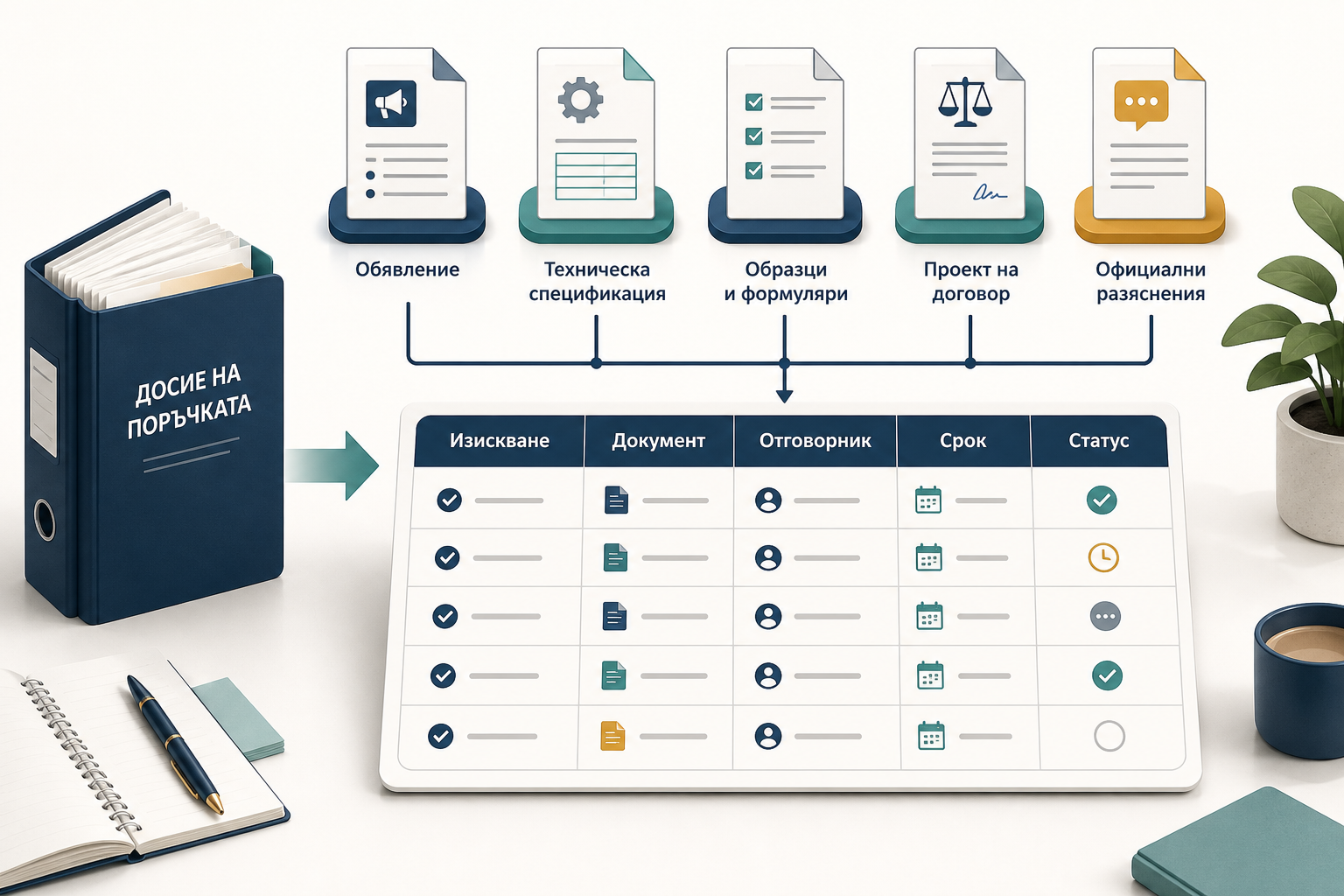
Start with the announcement, documentation, technical specifications, samples, and draft contract. Do not consider individual files in isolation. A requirement regarding a deadline, team, or warranty may appear in more than one place, and differing interpretations of it may lead to inconsistencies.
Create a spreadsheet with at least the following columns:
- a requirement of the contracting authority;
- a document or part of the bid to which it relates;
- person in charge;
- final internal deadline;
- Verification status.
Stay up to date on the clarifications and changes in The Centralized Automated Information System “Electronic Public Procurement” (CAIS EPP). They may amend the initial instructions. If a condition is unclear, contradictory, or unreasonably restricts competition, the options for requesting clarification or challenging the condition must be evaluated before the applicable deadline expires.
2. Verify the participant's eligibility
Before investing time in the technical proposal, determine whether the bidder meets the eligibility requirements. Review the grounds for mandatory and optional disqualification specified by the contracting authority.
Next, compare the requirements regarding eligibility, economic and financial standing, and technical and professional capabilities with the company’s actual data. It is not enough for the requirement to appear to be met on paper. There must be verifiable evidence that can be provided upon request.
If there is a circumstance that could lead to disqualification, assess whether reliability measures apply and how they should be demonstrated. Do not conceal adverse information in the European Single Procurement Document (ESPD), as incomplete or false declarations create additional risk.
3. Carefully review the ESPD
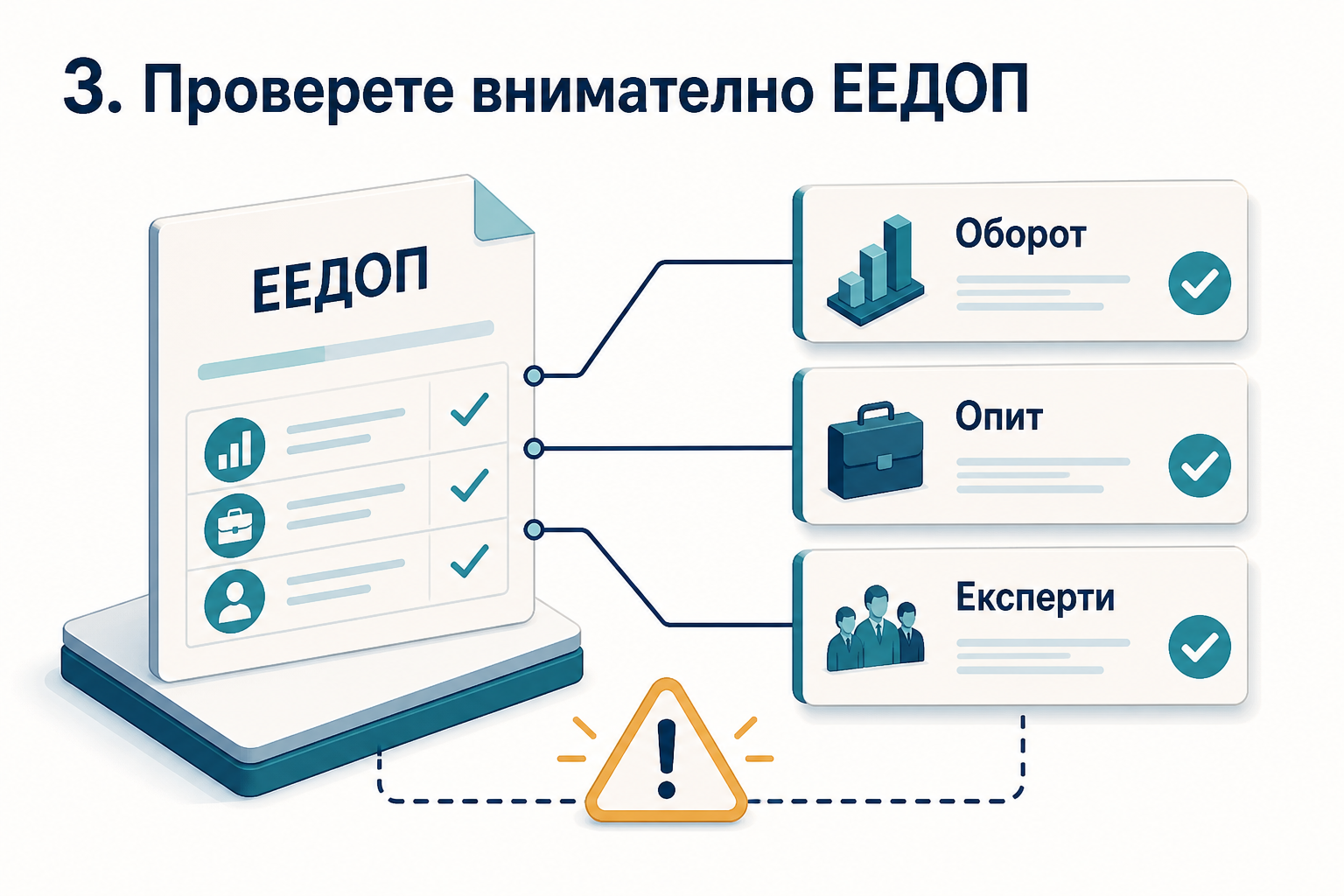
The ESPD is the declaration used to provide information at the relevant stage regarding the bidder’s personal circumstances and compliance with the selection criteria. The information contained therein must be consistent with the supporting documentation and the other parts of the bid.
Before submitting, please check:
- Have all relevant sections been completed?;
- Are the revenue, experience, experts, and resources listed correctly?
- Do the declared activities correspond to the technical proposal?;
- Have the subcontractors and third parties been declared?;
- Has a separate ESPD been submitted by each person for whom it is required?
- Has the document been signed by a person with the necessary authority to act on behalf of the company?
A common mistake is to list one expert or a similar contract in the ESPD, while a different one appears in the technical proposal. Such discrepancies must be corrected before submission.
4. Arrange for the participation of a consortium, subcontractor, or third party
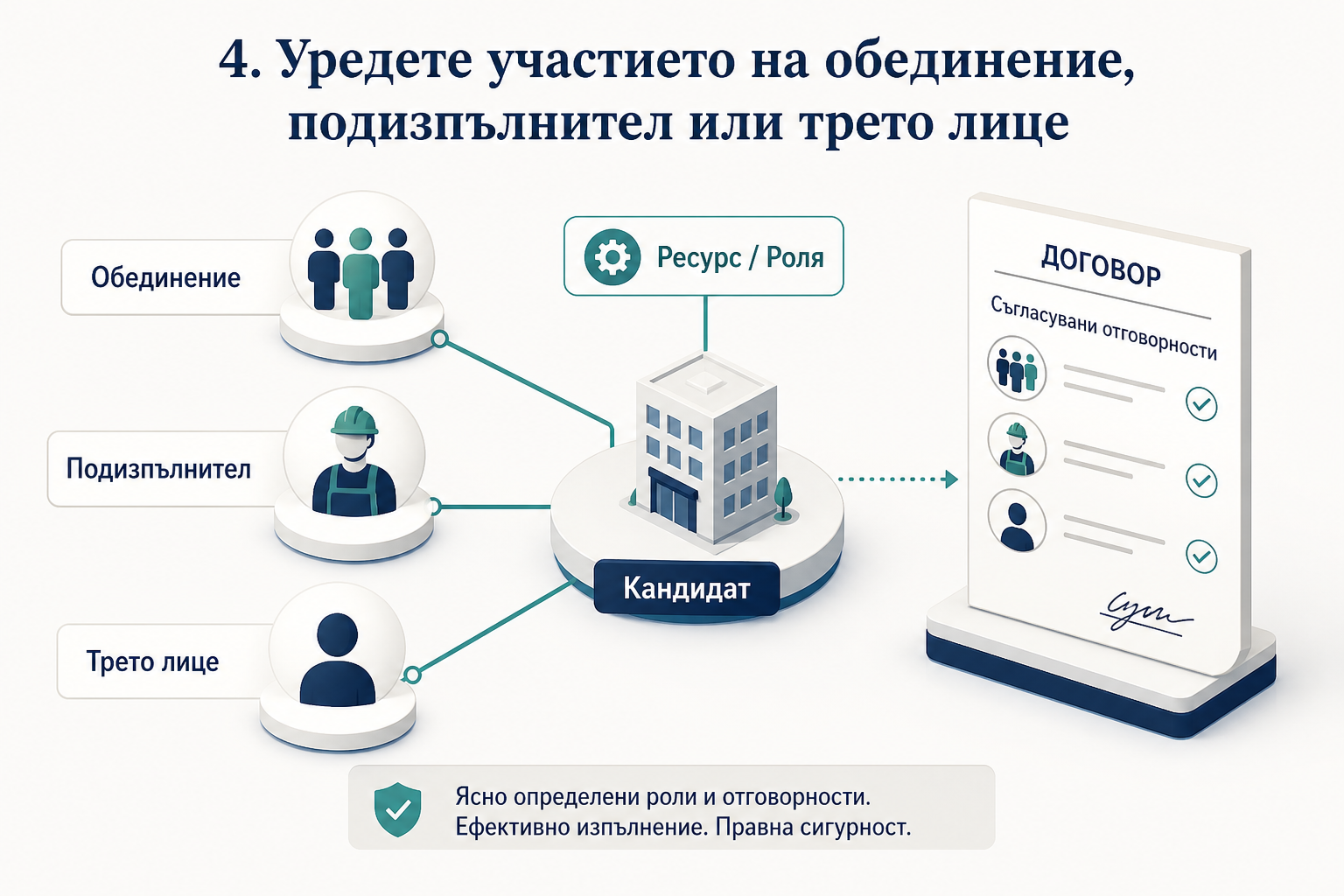
When participating as a consortium, the agreement between the partners must clearly specify the representative, the division of tasks, and the responsibilities. These arrangements must be consistent with the ESPD and the technical proposal.
When using a third party’s capacity, actual access to the declared resources must be demonstrated throughout the entire required period. In the case of a subcontractor, the scope and nature of the assigned activities, the required declarations, and the grounds for disqualification are verified.
Do not automatically assume that every criterion can be met by any partner. Some requirements must be met by the person who will actually perform the relevant activity, especially when they relate to professional registration, a license, or specific expertise.
5. Conduct a legal review of the technical proposal
The technical proposal must meet every minimum requirement. Review it line by line against the technical specifications and the evaluation criteria.
Verify that the proposed timelines, team, methodology, resources, and deliverables are consistent across all documents. Avoid conditional phrasing such as “if possible” or “subject to further negotiation” when the contracting authority requires an unconditional commitment.
If mandatory templates are used, do not alter their structure without good reason. Confidential information must be identified with justification. Classifying the entire proposal as confidential may violate transparency rules.
6. Review the price quote
Verify the unit prices, quantities, subtotals, and total amount using mathematical calculations. Clarify whether the amounts include or exclude VAT and whether they include all costs required by the contracting authority.
The price must be within the acceptable range and consistent with the technical proposal. If the methodology promises a larger team or additional work, verify that the associated costs are reflected. Ambiguity regarding which option is being proposed may constitute grounds for disqualification.
Also consider the risk that the price might be deemed unusually favorable. Even before submitting your bid, gather data on performance, discounts, your own resources, and other objective factors that can be used to support your proposal if necessary.
7. Verify the authority to act on behalf of the company and the signatures
Determine who is authorized to represent the participant and whether the representation is sole or joint. When the bid is submitted by an authorized representative, the power of attorney must cover the necessary actions.
When forming an association, review the agreement, the appointment of a representative, and any powers of attorney granted by the members. Make sure that the qualified electronic signature (QES) used is valid and belongs to the correct person.
Do not assume that every file must be signed separately with a digital signature. Follow the specific rules set forth in the Public Procurement Act (PPA), the Regulations for the Implementation of the Public Procurement Act (RIPA), the Centralized Electronic Procurement System (CAIS EOP), and the contracting authority’s documentation.
8. Perform a technical inspection in the CAIS EOP system
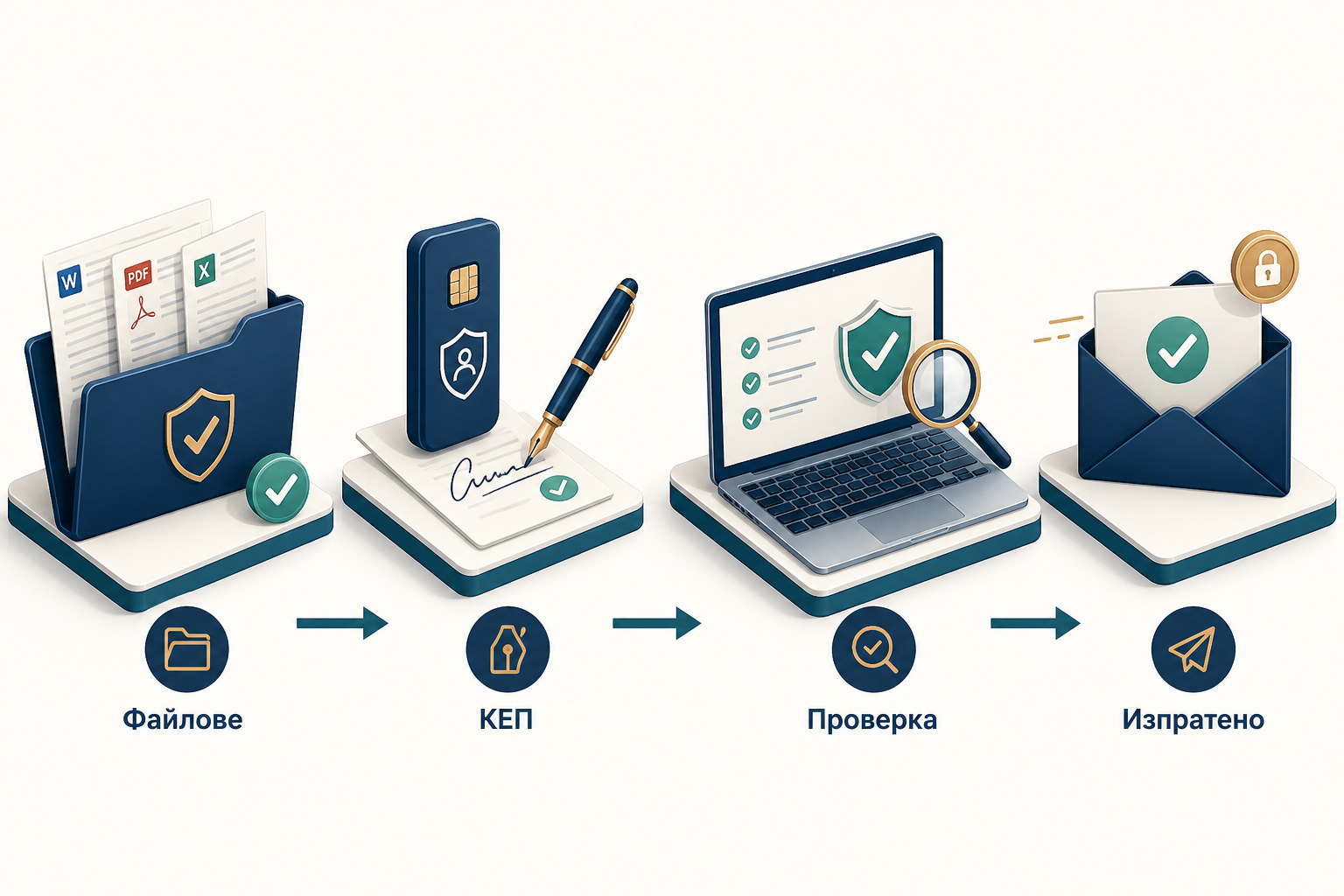
Do not wait until the last minute to submit your bid. Access the correct electronic file and review the procedure and the specific lot. Use readable files with clear names and acceptable formats.
Before the final submission, please confirm that:
- All files have been uploaded to the correct fields;
- There are no damaged, empty, or outdated versions;
- electronic signatures are validated;
- the price quote is not placed in the wrong spot;
- The offer has been sent, not just saved as a draft.
Save the electronic confirmation of successful submission. If you have any technical or regulatory questions, refer to the official guidelines of the CAIS EOP and the information at The Public Procurement Agency (PPA).
Final Checklist Before Submitting the Bid
- The announcement, the documentation, the draft contract, and all clarifications have been reviewed.
- Every selection criterion has been met and can be substantiated.
- The grounds for dismissal have been verified.
- The ESPD is complete, consistent, and signed by an authorized person.
- The documents pertaining to the consortium, subcontractors, and third parties are attached.
- The technical proposal meets all minimum requirements.
- The prices have been calculated correctly and are consistent with the technical specifications.
- The powers of attorney, representation, and digital signatures have been verified.
- The final versions of all files have been uploaded.
- The bid was successfully submitted before the deadline.
What Can Be Corrected After Filing
Not every omission can be corrected after the deadline. In certain cases, clarifications or additional documents regarding personal circumstances and selection criteria may be requested. This does not mean that the participant may submit a new bid.
As a general rule, substantial changes to the technical or price proposal are not permitted. Upon request by the evaluation committee, the response must be accurate, timely, and limited to what was requested, without altering the commitments originally made.
What to Keep After Filing
File the final bid, the signed documents, the confirmation from CAIS EOP, and the internal approvals of the price and terms. Be prepared to provide evidence of the circumstances you have declared whenever the contracting authority requests it.
When Is Legal Support Useful in Public Procurement?
Legal Support for Public Procurement It may include a review of the documentation, the ESPD, the technical and financial proposals, as well as a pre-submission risk assessment. A timely review helps identify critical nonconformities while they can still be corrected.
When the procedure involves complex administrative requirements or a dispute arises regarding an act of the contracting authority, it may also be necessary to Procedural Defense in Administrative Law.


