

Buying a yacht in the European Union often seems like a relatively standard transaction involving movable property. In practice, however, the tax treatment can be significantly more complex. The VAT due depends not only on the country where the yacht is located, but also on its status, age, and use; the identity of the seller and buyer; how it is transported after the sale; and its intended use.
Special attention is required in cross-border transactions, as incorrectly determining the applicable regime may result in double VAT charges, registration obligations, disputes with tax and customs authorities, or difficulties in the subsequent sale of the vessel.
1. Why is the yacht's VAT status so important?
When purchasing a yacht in the EU, one of the first questions to ask is whether it can be proven that the VAT status of the yacht has been settled within the European Union.
In practice, terms such as “VAT paid” or “EU VAT paid” are often used. However, these do not constitute a separate legal status that is necessarily attested by a specific document.
The yacht’s history should be investigated to determine the basis on which it is located and used in the EU, including whether:
- VAT was properly charged and paid at the time of the original sale or import;
- there is an intra-Community transaction;
- the yacht was taken out of the EU and subsequently returned;
- a customs procedure has been used;
- subsequent sales have been made that affect its tax status.
Therefore, simply having an invoice or a statement from the seller that the yacht is “VAT paid” is not always sufficient.
Therefore, before the transaction is concluded, it is advisable to conduct Legal Due Diligence When Buying a Yacht, covering the vessel's ownership, VAT status, registration, and customs history.

2. Purchase of a new yacht from another EU member state
The term “new vehicle” has special significance under EU VAT Legislation.
Under Directive 2006/112/EC, a vessel longer than 7.5 meters generally falls within the definition of a means of transport, except for certain categories of vessels used for specific commercial, industrial, fishing, or rescue activities.
A vessel is considered “new” when at least one of the following conditions is met:
- the delivery was made within three months of its initial commissioning; or
- The vessel has been in operation for no more than 100 hours.
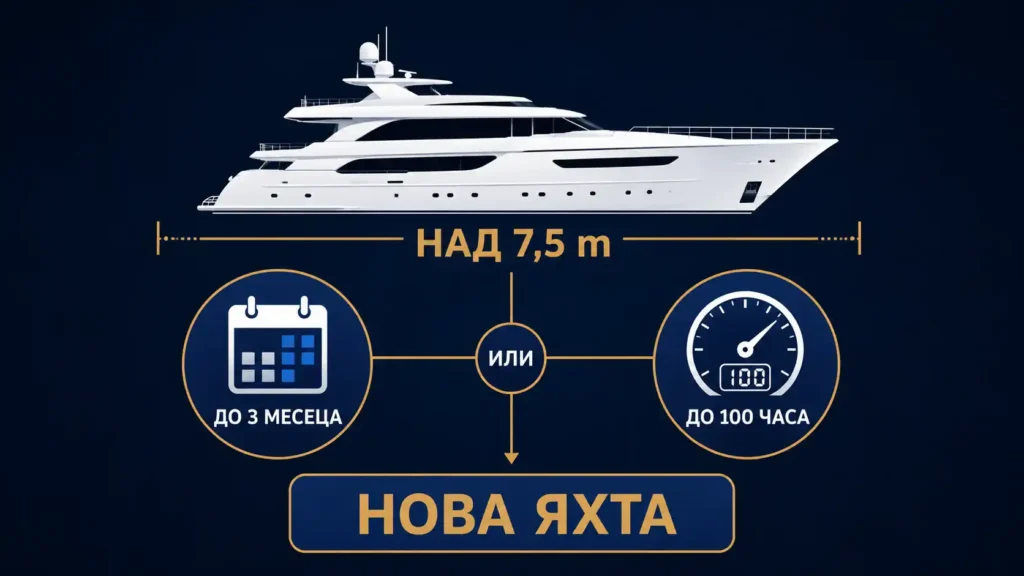
This rule is particularly important because the intra-Community acquisition of a new vehicle is subject to taxation in the Member State where the transport of the vehicle ends, even when the purchaser is an individual.
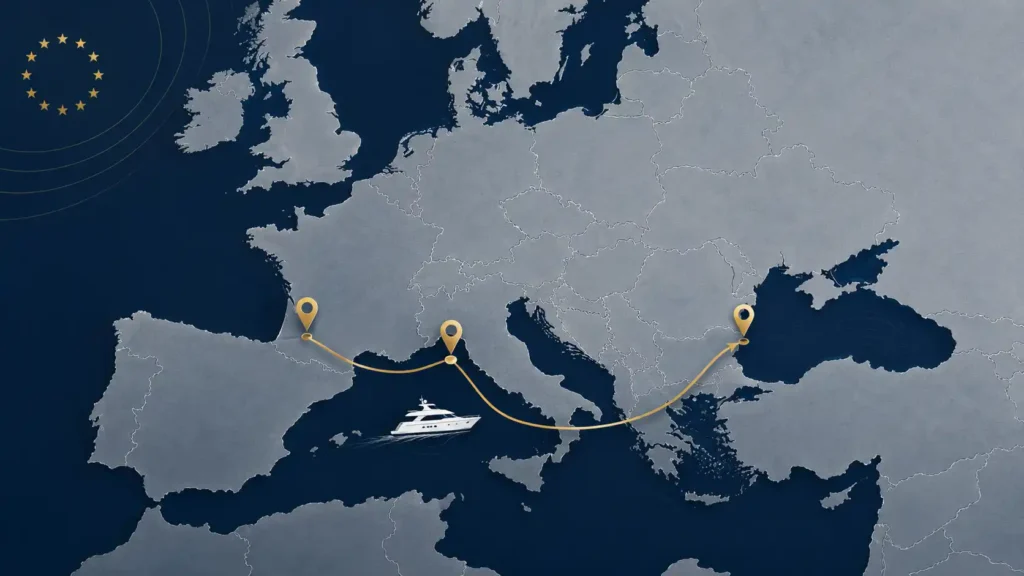
For example, if a Bulgarian individual purchases a new yacht from a dealer in Italy and the yacht is transported or sailed to Bulgaria as part of the transaction, in principle, the tax treatment should be considered as an intra-Community acquisition of a new means of transport in the country of destination.
What matters is the status of the vessel at the time of delivery. The subsequent accumulation of more than 100 hours of navigation does not automatically make the transaction an acquisition of a used vessel.
3. Purchase of a used yacht from another Member State
For used yachts, the procedure depends to a large extent on who the seller is and how they acquired the vessel.
Sale between private individuals
When an individual sells his or her own used yacht to another individual, and the sale is not carried out as part of an economic activity, the transaction generally does not constitute a taxable supply by a taxable person.
However, this does not mean that the buyer should disregard the yacht’s previous VAT and customs history.
For expensive vessels, it is advisable to trace the chain of ownership and review the documents related to the initial purchase or import.
Purchase from a dealer or a company
When the seller is a commercial entity or a professional dealer, various arrangements are possible.
Depending on the specific transaction, the following may apply:
- standard VAT calculation;
- intra-Community supply;
- a special margin taxation regime for certain used goods;
- another specific procedure, depending on the circumstances.
Therefore, two yachts that appear to be identical and are sold at the same price may be subject to completely different VAT treatment.
4. Does the country where the yacht is located matter?
Yes.
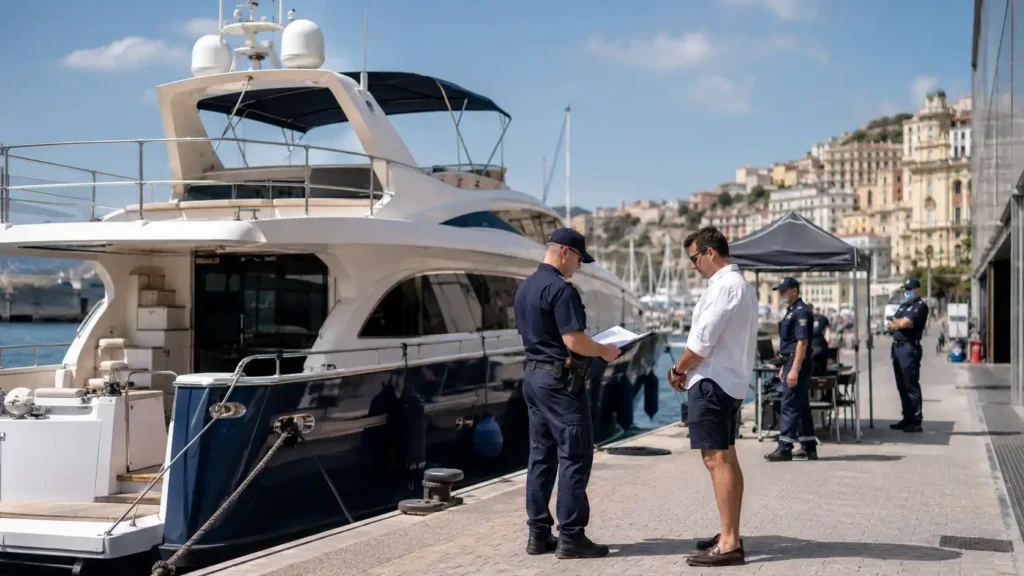
For VAT purposes, the place of supply and the vessel’s movement in connection with the transaction are of decisive importance.
It is not enough to establish:
"The yacht is in Italy."
Please note:
- where the yacht was located at the time of sale;
- where the transportation begins;
- where it ends;
- Who arranges the transportation;
- whether the shipment is directly related to the delivery;
- in which country is the seller established;
- What is the buyer's tax status?
These facts may determine in which country a VAT liability arises.
5. Purchasing a yacht outside the European Union
The situation is different when a yacht is purchased, for example, in Turkey, the United States, the United Kingdom, or another country outside the EU’s customs and VAT territory and is subsequently imported into the Union.
In that case, in addition to the purchase price, the following should be analyzed:
- customs clearance;
- import VAT;
- any applicable duty;
- the country through which the yacht enters the EU;
- customs value;
- the applicable customs procedure.
When a yacht is released for free circulation, this generally has implications both with regard to customs duties, where applicable, and with regard to import VAT. The specific tax and customs implications should be analyzed before the yacht is brought into the European Union.
6. Temporary Admission of Yachts from Outside the EU
A particularly important scenario is the use within the EU of a yacht that does not have the status of an EU good.
If the relevant conditions are met, the temporary admission regime may be applied, allowing certain vessels to be used within the customs territory of the EU without paying import duties or VAT for a limited period.
For private vessels, the regime typically involves a period of up to 18 months and specific requirements regarding the identification of the owner or operator outside the EU, registration, and the manner of use.
This procedure should not be confused with the purchase of a yacht on which VAT has been paid within the EU. The yacht remains a non-Union good, and upon expiration of the permitted period, it must be re-exported or placed under another eligible customs procedure.
7. What happens if a yacht on which VAT has been paid leaves the EU?
The fact that VAT was paid on a yacht in the past does not automatically mean that this status will be maintained in every subsequent situation.
Leaving the EU customs territory, a change in ownership, and the subsequent return of the goods may necessitate an analysis of the “returned goods” regime and other provisions under customs legislation.
It is particularly risky to purchase a yacht that has historically been in the EU but is located outside the EU immediately prior to the sale.
In such a case, the buyer should not automatically assume that a previous VAT payment eliminates all future tax obligations.
8. Can a company deduct VAT on the purchase of a yacht?
That depends on how the yacht will be used.
The mere fact that the buyer is a corporation and is registered for VAT does not automatically mean that the VAT paid at the time of purchase is refundable. When making a purchase through a corporation, it is necessary to Commercial and Corporate Structuring, taking into account the actual use and operation of the yacht.
Under the general rules, the right to a deduction is linked to the use of the acquired goods in the taxable economic activity of the taxpayer.
For example, it should be determined whether the yacht will be used for:
- charter operations;
- rental;
- tourism services;
- transportation;
- other actual business activity;
or primarily for the personal purposes of the owner, the manager, or related parties.
In cases of mixed or personal use, restrictions on the right to a tax credit may arise, as well as subsequent VAT implications.
9. Commercial yachts are not always treated as yachts for personal use
The VAT Directive provides for special exemptions for certain vessels used for navigation on the high seas and for commercial purposes.
However, these exemptions do not apply automatically simply because the yacht is registered to a company or is formally designated as a “commercial yacht.”
The specific substantive legal conditions must be met, including the actual purpose and use of the vessel.
Therefore, a structure in which a yacht is owned by a company should not, in and of itself, be regarded as a means of avoiding VAT.
10. What documents should be reviewed before making a purchase?
When purchasing a yacht across international borders, it is advisable to verify at least the following before paying the purchase price:
- the purchase and sale agreement;
- previous acquisition agreements;
- the original invoice from the manufacturer or dealer;
- invoices evidencing the assessment of VAT;
- import documents, when the yacht is imported from a third country;
- customs declarations;
- registration documents;
- evidence of the place and date of initial commissioning;
- information about sailing times, when applicable;
- documents for export and re-import;
- documents relating to customs procedures;
- the history of ownership.
When the transaction value is significant, the VAT audit should be part of the overall legal and technical due diligence process.
11. A common mistake: “There’s an invoice with VAT, so there’s no risk.”
That's not always true.
An invoice is an important document, but it is necessary to determine whether:
- was issued by the appropriate person;
- refers specifically to that particular vessel;
- the tax has been assessed in the correct country;
- the correct VAT treatment has been applied;
- Subsequent transactions have not altered the relevant circumstances.
For yachts that have changed jurisdictions, flags, and owners over the years, the tax history can be significantly more complex than that of a typical sale of personal property.
12. Practical Example
A Bulgarian citizen decides to purchase a 15-meter yacht located in France.
Before the transaction, the following must be determined:
- whether the yacht is new or used for VAT purposes;
- Who is the seller—an individual, a dealer, or a company;
- What VAT regime was applied to the previous transactions;
- where the yacht will be delivered;
- whether, following the acquisition, it will be transported to another Member State;
- whether transportation is part of the delivery itself;
- whether the buyer is purchasing the yacht for personal or commercial use.
The answer to any of these questions may affect the tax treatment.
Conclusion
When buying a yacht in Europe, the question “Has the VAT been paid?” is often just the beginning of the analysis.
The correct tax treatment depends on a combination of factors: the age and use of the vessel, the country of purchase, the place of delivery, the status of the seller and buyer, the yacht’s movement between countries, and its intended future use.
For cross-border transactions, it is recommended that the tax and customs status be verified before signing the final contract and paying the price, rather than after the acquisition.
This article is for general informational purposes only and does not constitute legal or tax advice regarding a specific transaction. When purchasing a yacht, the individual circumstances and the applicable laws in the relevant countries should be analyzed.


